
Resonance: A Plague Tale Legacy Theseus in Resonance
The Minoan echo whose trials still open doors in 1334.
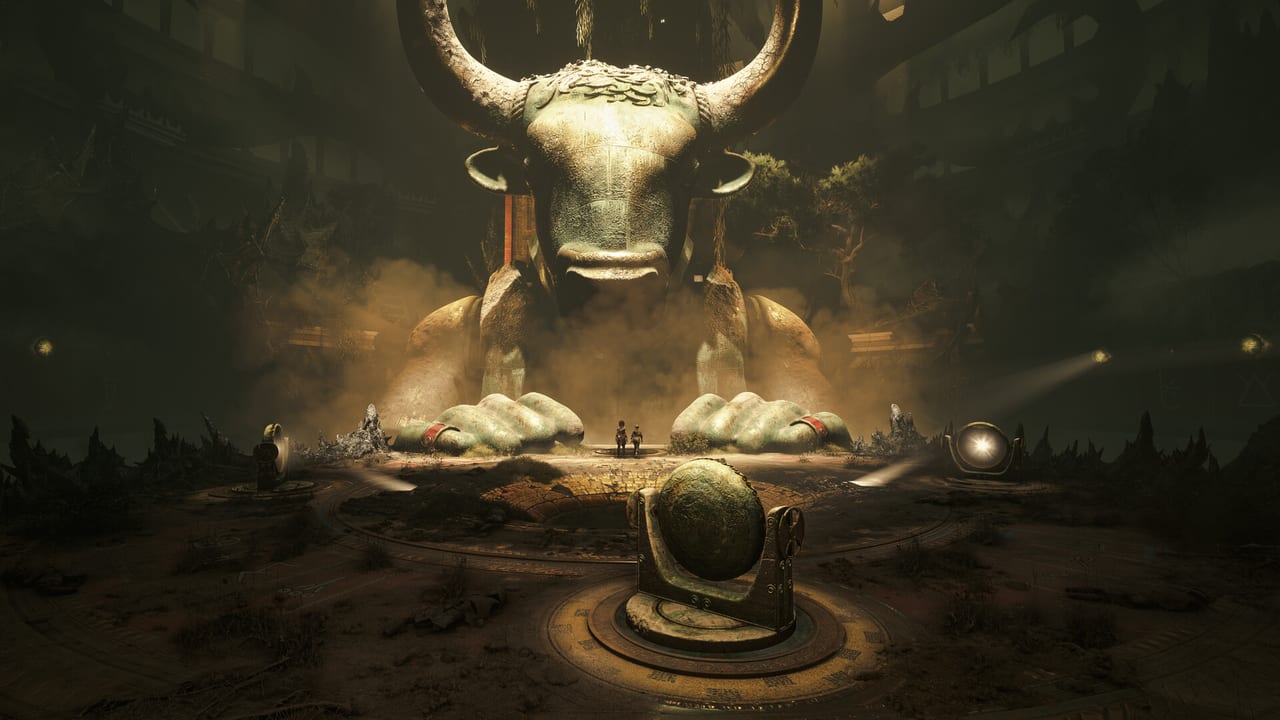
Theseus is the second body you inhabit in Resonance: A Plague Tale Legacy. He is not a title-screen character. Dual-timeline sections sit inside Sophia’s chapters and rewrite the rooms she walks in 1334. Wikipedia and Asobo interviews both describe that hook: events in the Minoan past change the medieval present. This page is his character and systems guide. The full myth spoilers, including Ariadne, Minos, and the beast, live on ending explained.
You do not unlock a Theseus campaign. You do not pick him in a New Game+ menu. When the game hands you his tools, treat them as combat verbs on the same pad as Sophia’s kick.
Not the schoolbook hero
Focus Entertainment’s own feature copy promised “a mythic hero drawn from the oldest legends.” The game that shipped is more interesting and less flattering. GameSpot’s review notes that Resonance’s Theseus is not a divine adventurer. He is a gladiator who rose through Minos’s competitions, with a secret arrangement with Daedalus, the engineer of the labyrinth. That is why so many island puzzles feel like someone else’s machine: they are.
Sophia’s visions of an armoured soldier on a sun-bleached island are his afterimage. The convent tar that gave her those visions is the same wound the series later names Prima Macula. Dual timeline is how Asobo tells that history without a lore narrator standing on a cliff.
Theseus sections teach you to keep using Sophia’s language in a different century: parry, close space, survive a crowd. Skills such as Echo’s Return are still Sophia’s purchases. The past is a classroom, not a second skill tree. Rank the live tree on skills.
Echoes, charms, and the axe chalices
Five Theseus Echoes sit in the campaign, usually as axe-chalice conversations that grant Pierced Coin charms. Finding all five unlocks In the Name of My Kin. They count toward the 30-charm Superstitious trophy. Chapter select can still pick them up after the story; they are not the missable Resonance Point pile. PowerPyx and IGN both place the first Echo in Chapter 5, Desolation It Wrought, with later coins in Chapters 6, 7, 9, and 10. Confirm the live counts on collectibles if a patch moves a chest.
Pierced Coins give a chance not to empty the Focus gauge on use. They are the Theseus-themed charm type, not a separate currency. If you are charm-ranking, read charms and treat coins as a Focus tax cut, not as a build identity.
How the past changes the present
When a Minoan fight ends, look at the 1334 room before you leave. Bridges drop. Doors unseal. A statue’s hand is in a new place because you won a trial two thousand years earlier. That is the Resonance of the title: Sophia is not visiting a ruin, she is finishing a circuit Daedalus left live.
The labyrinth chapter, Parallel Paths, is the loudest version of that idea. Sophia’s sketchbook is the real map. Inner, middle, and outer rings on later pedestals point at specific symbols. If you skip the book you will loop. Theseus is why those symbols mean anything. Leni can hold a mirror in the present. She cannot walk the gladiator floor with you.
Light Revelation, learned around the first full trial in From Hell It Rose, is the ability that lets Sophia see what the Minoan builders hid in walls and floors. Use it. The puzzle solutions page is the room-by-room version; this page only needs you to remember that Theseus is the reason the walls have an opinion.
What he is not
He is not Amicia. He is not a rat-king. He is not a second-player drop-in. He is not Alec, Sophia’s father, and he is not Faro. The army chasing Sophia wants a treasure. Theseus wanted a throne, a bargain, and a way through the dark. Those motives rhyme. They are not the same man in two costumes.
If you want the names Ariadne, Asterion, and the Chapter 12 arena, open the ending page after credits. If you are still in Chapter 4, stay here: treat every Theseus handoff as a combat lesson, then spend the next Resonance cluster on a mastery that makes crowds die faster.
Theseus is the creative risk that let Asobo leave France without leaving the Macula. Play him as a borrowed body with consequences, and the island stops feeling like a Tomb Raider skin.
Frequently Asked Questions
Quick answers to the most common questions.
Is Theseus a separate campaign?
No. Dual-timeline sections sit inside Sophia's chapters. There is no character select on the title screen.
Do I need to know the Greek myth?
No. Resonance retells Theseus, Ariadne, Minos, and the Minotaur on its own terms. The game teaches the version it needs.
What are Theseus Echoes?
Five Pierced Coin charms tied to axe-chalice scenes. They unlock In the Name of My Kin and count toward all 30 charms.
Does the past really change the present?
Yes. Winning a Minoan trial can drop a bridge or unseal a 1334 door. That is the dual-timeline hook, not a cutscene-only gallery.